A stage 3 modification is regarded by most as a track day or motor sport modification. Like stage 2 mods they will also need other mods to support them but they are usually far from ideal for road use as we will explain. … A stage 3 race modified car will also need to be regularly overhauled and serviced.
Competition cam, Engine balancing, Internal engine upgrades (pistons/head/valves), Sports gearbox, Suspension, race brakes.
Competition cams: Competition Camshafts simply means that tuners are able to increase the horsepower substantially by giving you more peak horsepower higher up the rev range than stock but you will notice the torque loss in the lower RPM than stock.
Performance cams increase the duration and timing of the valve openings during the engine stroke, increasing horsepower and making your car accelerate more quickly. … To install a new camshaft, you must expose the valve train by removing the valve cover and possibility the distributor.

Engine balancing: A very high-end race motor is usually balanced to ¼ ounce-inch, which is seen as the holy grail of balancing by enginebuilders. … Likewise, as rpm increases, the effect of ring drag, bearing friction, and cylinder pressure (until peak torque is reached) on an engine’s overallbalance increases as well.

Internal engine upgrades: performance and internal engine upgrades
1)dual row timing chain upgrade. 2)THE ultimate timing chain kit. …
3)ARP cylinder head studs. 4)ARP head studs are the ultimate way to go when you want the best for your engine. …
5)arp connecting rod bolt kit. …
6)X-beam forged connecting rods. …
7)balance rotating assembly.

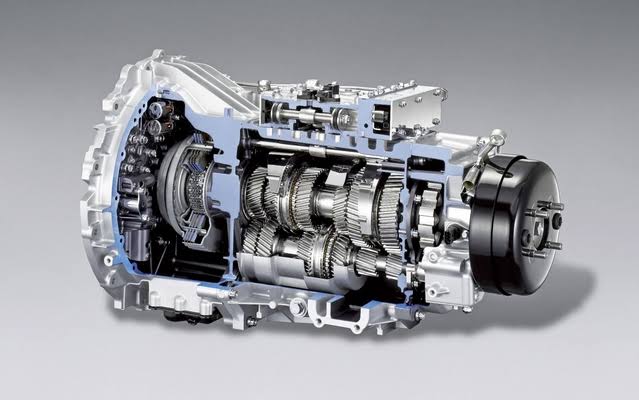
Sports gearbox: The 7-speed dual clutch transmission makes especially sporty driving performance possible: direct drive and lightning-fast gear changes without interrupting the shear force. The car “sits right on the gas”. It also achieves fuel economy better than that of a stock manual transmission, thanks to its excellent fuel efficiency.
- Capable of rpm of up to 9,000
- Gear change within a few hundredths of a second, below the level of human perception
- Two sub-transmissions: the first one transfers the propulsive power, and in the second one, the next gear is pre-selected
- Strategy-capable power take-up element is flexibly adjustable depending on the engine characteristics
- Various driving modes: manual, comfort, sport, supersports
Race suspension: Race suspension has two main roles. The first is to control the weight transfer of the car both laterally and longitudinally to improve cornering ability, while the second is to control the impacts from bumps or kerbs to maintain constant contact between the tyre and the road surface.
The end result of optimising both of these elements is an increase in grip which, ultimately, leads to better lap or stage times.


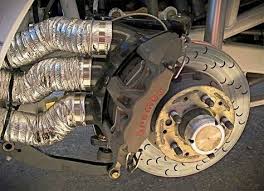
Race brakes: Racing braking system will run off an aftermarket pedal box with a brake pedal that operates two separate master cylinders. One handles the front brakes and the other operates the rear stoppers. This is so that you can alterbraking bias quickly and easily to get the braking feel you desire for a given circuit.

 Car Modifications